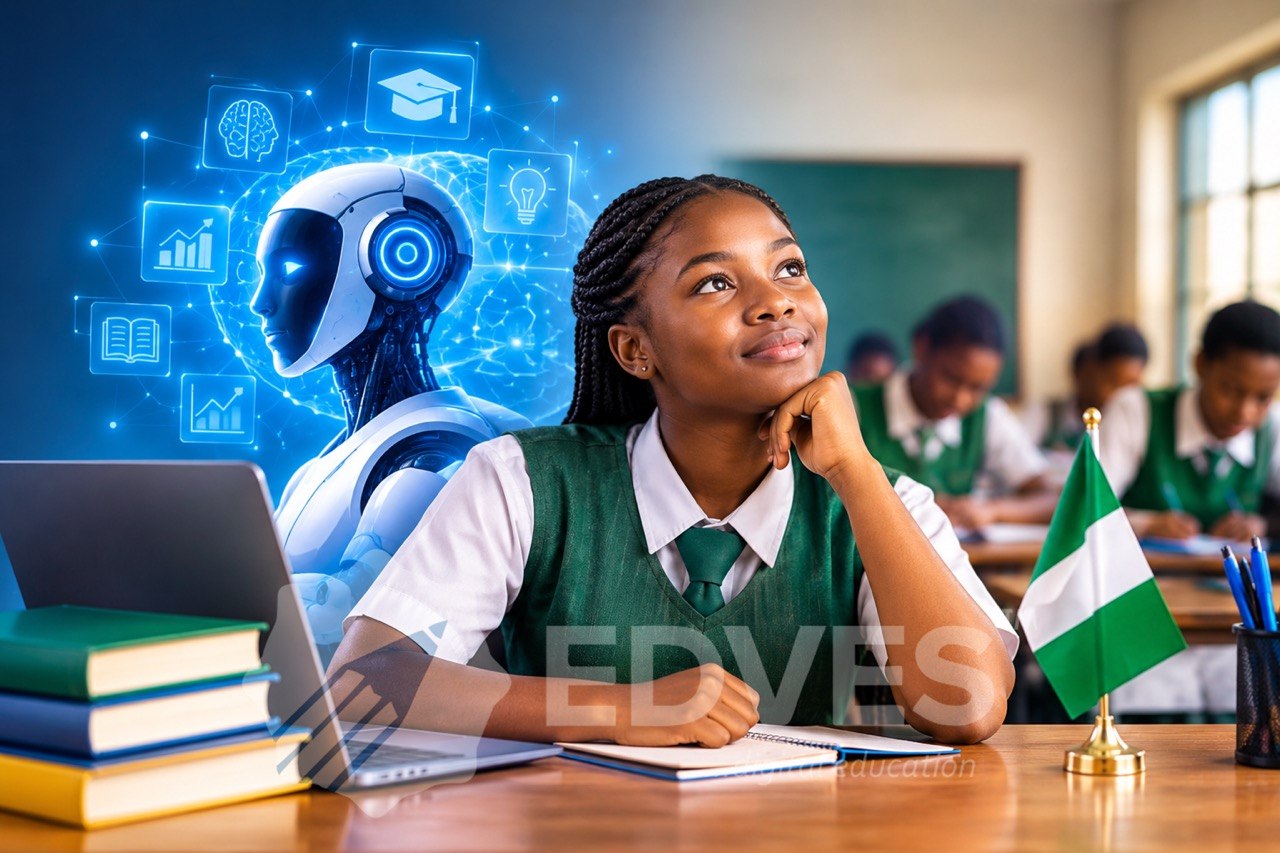
AI can write an essay in seconds.
It can create a lesson plan, explain a difficult topic, generate images, and analyse information.
As artificial intelligence becomes more capable, however, Nigerian schools need to ask an important question:
Are we becoming better at using AI as quickly as AI is becoming better at what it does?
AI presents enormous opportunities for education. But it also introduces new questions around learning, data, critical thinking, and responsible technology use.
The issue is no longer whether AI will enter Nigerian classrooms. It already has.
The real question is whether schools are prepared to use it well.
AI Is Already Changing Education
Students are experimenting with AI to research topics, generate ideas and complete assignments. Teachers are using it to develop lesson plans, create learning materials and reduce repetitive tasks.
Nigeria’s growing digital education ecosystem is also creating more opportunities for technology to support teaching and school management.
But adopting AI requires more than giving teachers and students access to another tool.
Schools need to ask:
• What problem are we solving?
• Are teachers prepared to use it?
• Is student data protected?
• Does it support the curriculum?
• How will we measure its impact?
Because technology without purpose can easily become another expense rather than an improvement.
The Risk Isn’t Just Wrong Information
One of the biggest concerns about AI is that it can produce inaccurate information while sounding convincing.
But there is another risk schools need to consider:
What happens when students stop thinking for themselves?
If AI writes every essay, what happens to writing skills?
If it solves every mathematics problem, what happens to problem-solving?
If it generates every idea, what happens to creativity?
This is why AI literacy matters.
Students need to learn not only how to use AI but also how to question its answers, verify information, and understand when using AI is appropriate. The goal should not be to create students who can get answers faster. It should be to develop students who can think critically about the answers they receive.
Teachers Still Matter
AI can help teachers create lesson ideas, generate assessments, organise information, and reduce administrative work.
But technology cannot replace the human understanding that teachers bring into the classroom.
A teacher knows when a normally active student has become unusually quiet. They understand the cultural and classroom context behind a student’s behaviour. They can adapt their approach based on what they see happening in real time.
AI can support that work.
It cannot replace the relationship at the heart of teaching.
That is why AI adoption must come with teacher training, not simply new software.
Schools Must Think About Data Too
AI adoption also raises an important question about student data.
Before introducing an AI-powered platform, schools should understand what information it collects, how that information is stored, who can access it and how it is used.
A popular AI tool is not automatically an appropriate educational tool.
Responsible adoption requires schools to consider privacy, security, accessibility and educational value alongside functionality.
So, Should Nigerian Schools Be Afraid of AI?
Not necessarily.
But they should be intentional.
Schools do not need to adopt every new AI tool simply because it is available. They need to identify where AI can genuinely improve teaching, learning, and school operations.
A practical starting point is to establish clear AI guidelines, train teachers, teach students responsible AI use, and regularly measure whether the technology is actually improving outcomes.
The question should not be:
“What can AI do for our school?â€
It should be:
“What does our school need, and where can AI genuinely help?â€
The Future of Education Must Remain Human
The future of Nigerian education will involve AI.
But it will also require good teachers, critical thinkers, responsible technology, better data, and human connection.
AI can make schools more efficient and give educators powerful new tools. But education has never been simply about producing answers.
It is about developing people who can think, question, create, and make informed decisions.
At Edves, we believe technology should make schools smarter, not make education less human.
The future is becoming more intelligent. Nigerian schools have an opportunity to make sure it remains human, too.