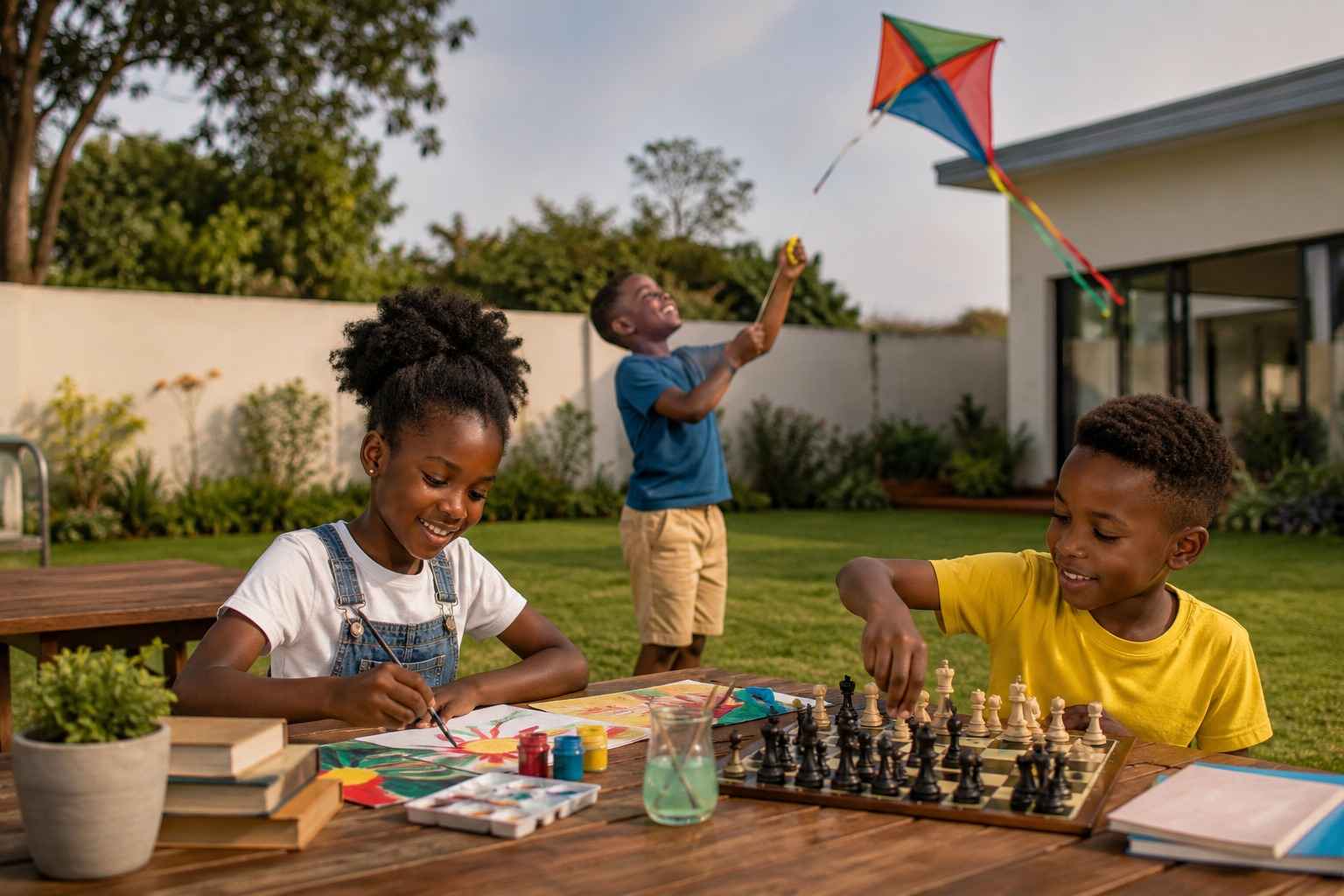
We’re back with the second half of our holiday activity series!
Here are activities 9–15 to keep the holiday fun, meaningful, and engaging.
9. Explore STEM Beyond the Classroom
Science, Technology, Engineering, and Mathematics (STEM) don't have to be confined to textbooks or laboratories. In fact, some of the most memorable STEM learning happens when students are free to experiment, ask questions, and explore ideas at their own pace.
The holiday is an ideal time to nurture that curiosity.
Students can conduct simple science experiments at home, build with robotics kits, watch documentaries about space exploration or engineering, visit science museums where available, or continue developing coding projects in Codecraft. Every activity encourages students to investigate how things work rather than simply memorising facts.
The objective isn't to cover more curriculum. It's to develop curiosity, resilience, and the confidence to solve unfamiliar problems, qualities that define successful STEM learners.
10. Build Confidence by Completing Meaningful Challenges
Confidence doesn't grow from constant praise. It grows from accomplishing things that once seemed difficult.
Each completed book, solved mathematics problem, finished coding project, volunteer experience, or creative project gives students tangible evidence of their own progress. Those small achievements gradually reshape how they see themselves.
Parents and teachers can reinforce this by celebrating effort as much as results. Instead of asking, "Did you finish everything?" consider asking, "What did you learn today?" or "What are you most proud of this week?"
When students learn to recognise their own growth, they become more willing to embrace new challenges in the classroom and beyond.
11. Learn the Basics of a New Language
Learning another language introduces students to new cultures while strengthening memory, listening, and communication skills. The school holiday removes the pressure of examinations, making it an ideal time to learn simply for the enjoyment of discovery.
Just 10 to 15 minutes each day using a language-learning app, watching beginner videos, listening to native speakers, or practising simple conversations can build meaningful vocabulary over several weeks.
Beyond the language itself, students develop greater cultural awareness and confidence communicating with people from different backgrounds, an increasingly valuable skill in a connected world.
12. Stay Physically Active
Productivity isn't measured by how long a student sits at a desk.
Physical activity plays a direct role in concentration, emotional well-being, sleep quality, and overall academic performance. Students who remain active during the holidays often return to school with more energy and improved focus.
Exercise doesn't need to follow a formal training programme. Walking, cycling, swimming, football, basketball, dancing, skipping, hiking, or simply playing outdoors with friends all contribute to healthier minds and bodies.
A balanced holiday means movement, rest, and activities alongside learning.
13. Learn Basic Financial Literacy
Financial literacy is one of the most practical life skills students can develop, yet it often receives limited attention in traditional classrooms.
The holiday creates opportunities to introduce simple financial concepts through everyday experiences.
Students can create a savings goal, plan a weekly budget, compare prices before making purchases, understand the difference between needs and wants, or explore how banks, investments, and entrepreneurship work.
These lessons build habits that remain valuable long after students leave school, helping them make informed financial decisions throughout adulthood.
14. Keep a Journal
Journaling is one of the simplest ways to encourage reflection and personal growth.
Writing for just a few minutes each day helps students organise their thoughts, strengthen their written communication, and become more aware of their own learning journey. A journal doesn't need to be complicated.
Students might record something new they learned, describe an interesting experience, write about a challenge they overcame, or list three things they appreciated that day.
Over time, these entries become more than memories. They become evidence of growth, resilience, and progress that students can revisit long after the holiday ends.
15. Learn One Practical Life Skill
Academic success is important, but so is learning how to navigate everyday life with confidence.
The school holiday provides time to develop practical skills that support independence and responsibility.
Students might learn to prepare a simple meal, wash and iron their clothes, organise their study space, manage a daily schedule, use basic productivity tools, practise public transportation safety, or complete simple household tasks.
These experiences teach responsibility, problem-solving, and self-reliance. These qualities support success both inside and outside the classroom.
Learning just one new life skill before the next term begins can leave a lasting impact.
Turning Good Intentions Into a Sustainable Holiday Routine
The goal isn't to complete all 15 activities. It's time to choose a handful that create a healthy rhythm students can realistically maintain.
Educational progress during long holidays rarely comes from intensive study sessions. It comes from consistent habits practised over time.
A balanced routine might look like this:
Morning: Reading, mathematics practice, or a 20-minute Codecraft session.
Afternoon: Physical activity, volunteering, or learning a practical life skill.
Evening: Creative projects, journaling, family conversations, or independent reading.
Most importantly, leave space for rest. Unstructured play, time with family, and moments of quiet reflection are essential parts of healthy development. The objective isn't to recreate school during the holidays; it's to return to school refreshed, curious, and ready to learn.
Students don't need perfectly planned days. They simply need consistent opportunities to keep growing.
Small Steps Today Create Bigger Opportunities Tomorrow
A productive holiday isn't measured by how busy students become. It's measured by the habits they develop, the confidence they gain, and the skills they carry into the next school term.
Each small achievement becomes another building block for lifelong learning.
This article is the third instalment in the EDVES Holiday Productivity Series. In the next edition, we'll explore how students can transform a simple Codecraft project into something they're proud to showcase when school resumes and how teachers and school leaders can celebrate and extend that learning throughout the academic year.
At EDVES, we believe meaningful learning doesn't have to stop when the school gates close.
Every holiday presents an opportunity for students to discover new interests, strengthen existing skills, and prepare for the future with greater confidence. That's why we build technology that supports learning beyond the classroom, helping schools connect teaching, digital innovation, and student development throughout the entire academic year.
From AI-powered school management to practical learning experiences like Codecraft, EDVES equips schools across Nigeria, Ghana, the United States, the United Kingdom, and several African countries with the tools they need to simplify administration, enrich learning, and prepare every student for a rapidly changing world.
Because the strongest school years don't begin on the first day of term, they begin with how students choose to spend the time before they return.